

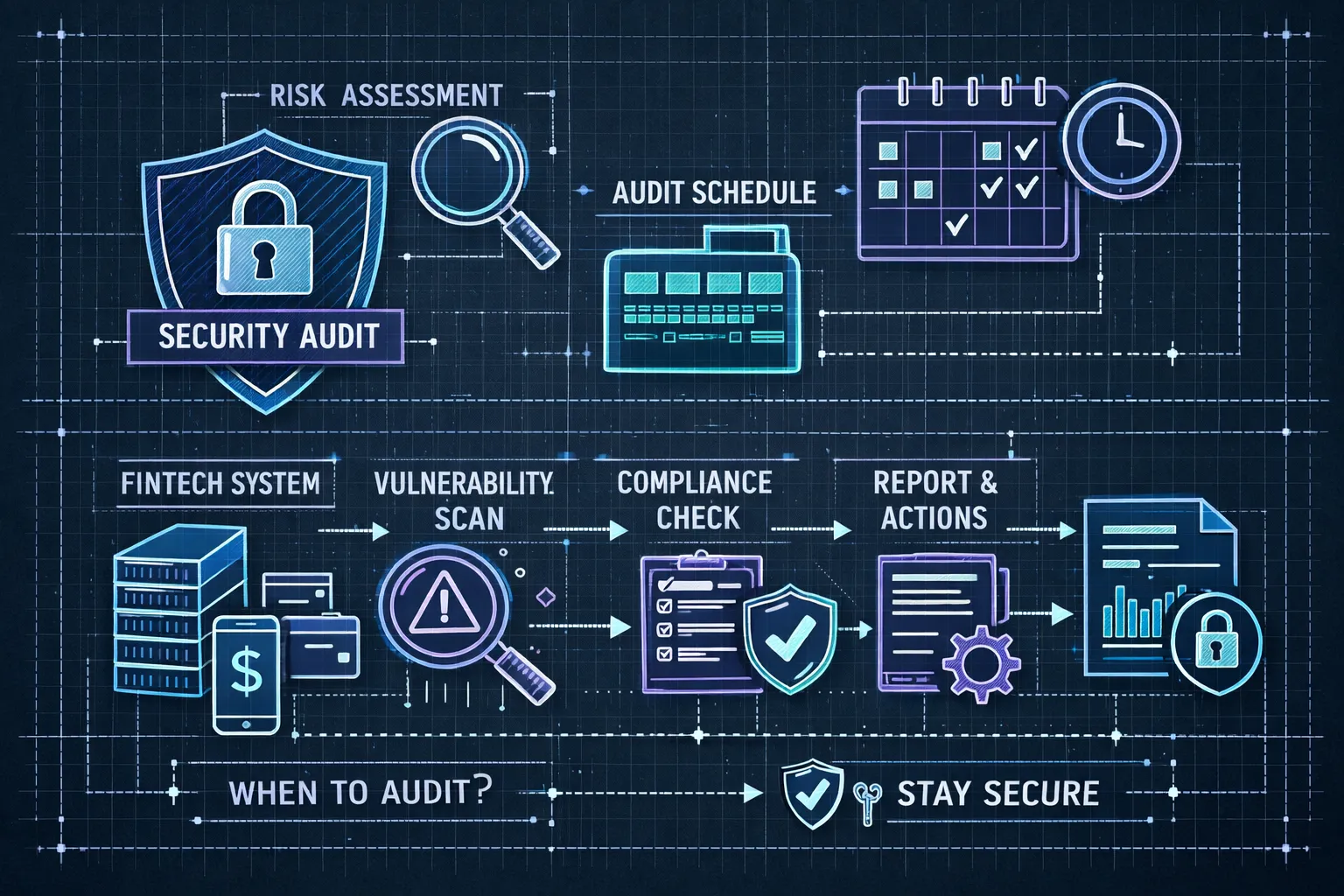
The core problem with ad-hoc auditing
When audits are treated as unexpected fire drills rather than scheduled operational disciplines, they derail entire engineering quarters. We frequently see startups forced to halt all feature development for two months because an enterprise partner demanded a SOC 2 Type 2 report that the startup hadn't prepared for. By mapping your audit cadence to your company's maturity stage and the Nigerian regulatory calendar, you transform compliance from a blocker into a competitive advantage.
Audit frequency mapped by maturity stage
The Startup Phase (Seed to Series A)
At this stage, your primary goals are securing your initial operating licenses, winning your first major B2B clients, and closing your Series A.
- SOC 2 Timing: Begin immediately with a SOC 2 Type 1. Using modern automation tooling (like Vanta or Drata), this is completable in 3-5 weeks at a cost of $15K-$30K. It proves to early investors that you take security seriously.
- Penetration Testing: Conduct your first manual penetration test right before exiting stealth mode or beta. This is critical for catching glaring architectural flaws. Review our guide on security audits before launch.
- NDPA Compliance: Appoint a DPO and register with the NDPC. Begin drafting privacy policies.
The Growth Phase (Series B+)
You are scaling fast, handling significant transaction volumes, and negotiating with Tier-1 Nigerian banks for direct integrations.
- SOC 2 Timing: SOC 2 Type 2 becomes the strict baseline. You must set a monitoring window of 3 to 12 months. The actual audit takes 4-8 weeks. Your sales team will lose deals without this.
- Penetration Testing: Move to an annual cadence. Crucially, add scoped pentests immediately following major architectural changes (e.g., migrating from monolithic architecture to microservices, or launching a new credit product).
- PCI DSS: If you are capturing PAN data directly, you must now undergo the grueling Level 1 onsite assessment by a QSA annually. If you use tokens via Paystack/Flutterwave, ensure your annual SAQ-A is filed. Read our PCI DSS compliance guide.
The Scale Phase (Enterprise / Pre-IPO)
You are a systemically important player in the ecosystem. Your compliance posture must be airtight and continuous.
- Continuous Compliance: Move beyond annual checks to continuous compliance monitoring year-round via integrated GRC platforms.
- ISO 27001: Implement ISO 27001 alongside your SOC 2 renewal to satisfy international partners and institutional investors.
- Advanced Testing: Move penetration testing to a quarterly cadence, supplemented by continuous vulnerability scanning and a public bug bounty program.
Need help structuring your technical audit calendar for the upcoming year?
Talk to a Security ArchitectThe Nigerian regulatory deadlines that anchor your calendar
Your internal engineering schedule must bend to external regulatory realities. In Nigeria, several hard deadlines dictate your planning:
- March 15th - NDPA Audit: If you process significant amounts of personal data, the Nigeria Data Protection Commission (NDPC) requires you to file your annual data protection audit report (conducted by a licensed DPCO) by March 15th every year. For details, see our NDPR/NDPA compliance guide.
- CBN CSAT Submissions: The Central Bank of Nigeria mandates that all licensed entities submit their Cybersecurity Self-Assessment Tool (CSAT) reports annually. Depending on your specific license tier (PSSP, PTSP, MMO), the exact deadline varies, but it is a hard anchor in your Q1/Q2 calendar. Ensure your CBN compliance requirements are met well in advance.
- PCI DSS Quarterly Scans: If you are subject to PCI DSS, Approved Scanning Vendor (ASV) vulnerability scans must be submitted exactly every 90 days. Missed scans result in immediate non-compliance flags.
Risk-based triggers for unscheduled audits
Not all audits happen on a calendar. Certain business events must automatically trigger a scoped security assessment, regardless of the time of year:
- Major Product Launches: Launching a new lending product, a virtual card integration, or a B2B API portal requires a pre-launch security assessment as a hard gate. Do not push financial logic to production without a review.
- Post-Breach or Near-Miss: Following any suspected data exfiltration or critical security incident, an immediate forensic assessment is required, followed by a formal remediation audit within 30-60 days to prove the gap is closed to regulators.
- M&A Activity (Post-Merger): If you acquire another startup, a full-scope technical audit is a mandatory condition of integration. The acquiring fintech inherently inherits the technical debt and vulnerabilities of the acquired codebase.
- Core Vendor Migrations: Migrating from AWS to Azure, or switching from a monolithic core banking provider to a modern microservices ledger, radically alters your threat model and triggers a scoped reassessment.
Shift-left: embedding security in the product cycle
Preparing for an audit at the end of the year is agonizing. Catching architectural flaws during the design stage costs up to 100x less than remediating them in production (per NIST guidance). Treat threat modeling as a mandatory phase in your engineering requirements gathering.
Deploy automated Static Application Security Testing (SAST) and Software Composition Analysis (SCA) tools directly into your CI/CD pipelines. This handles the routine detection of outdated libraries and syntax errors between formal audits, allowing you to reserve expensive, manual penetration testing for the complex business logic that scanners miss.
Your master planning checklist
Use this checklist to build your 12-month security calendar:
- Map Maturity: Define your current maturity stage and set the baseline frequency for SOC 2, PCI DSS, and penetration testing.
- Plot Regulatory Deadlines: Put the NDPA March 15 deadline and your CBN CSAT submission dates on the master engineering calendar immediately.
- Identify Commercial Anchors: Note the renewal dates for your largest enterprise contracts. They will ask for your updated SOC 2 report 30 days before renewal.
- Avoid Peak Sprints: Choose fiscal-year anchor points for your audits that explicitly avoid Q4 holiday freezes and your heaviest product release sprints.
- Configure Evidence Collection: Set up centralized logging (e.g., Datadog, ELK stack) and automated compliance checks via a GRC platform today. Do not wait for the auditor to ask for screenshots.
- Schedule Internal Readiness: Set an internal "mock audit" or readiness check exactly 8 weeks before each formal external audit begins.
- Buffer for Remediation: Always schedule a dedicated 30-day remediation window post-audit. If a penetration test finds a critical flaw, your engineers need reserved capacity to fix it immediately, not three sprints later.
Audit timing is a strategic operational discipline
The difference between a fintech that closes massive B2B enterprise deals quickly and one that stalls indefinitely in procurement is rarely the quality of the product. It is almost always the availability of pristine, up-to-date audit documentation. Control your audit calendar, or your enterprise clients will control it for you.
Frequently asked questions
When should a fintech startup do its first penetration test?
Ideally, right before launching to the public, or before submitting your application for a CBN license (like a PSSP or PTSP). Do not wait until you have thousands of users; catching architectural flaws during the beta phase is infinitely cheaper than remediating a breach later.
What is the difference between SOC 2 Type 1 and Type 2?
SOC 2 Type 1 evaluates your security design at a single specific point in time (e.g., 'Are your policies documented today?'). SOC 2 Type 2 evaluates the operational effectiveness of those controls over a sustained period, typically 3 to 12 months (e.g., 'Did you actually enforce those policies every day for the last six months?').
How often does the CBN require security audits?
The Central Bank of Nigeria expects licensed entities to submit an annual Cybersecurity Self-Assessment Tool (CSAT) report. Furthermore, major infrastructure upgrades or the launch of new financial products often trigger ad-hoc regulatory reviews.
Should we freeze engineering deployments during an audit?
During a SOC 2 audit, you do not need to freeze deployments; you just need to prove you followed your documented change management process (e.g., peer reviews, Jira tickets). However, during a penetration test, you should freeze major architectural changes to avoid creating a 'moving target' that invalidates the tester's findings.
Related reading
Blog: Security audit before launch · How a Simpa Labs pentest works · 10-point security checklist · Cloud Security Checklist
Guides: Licensing security · Security before fundraising · Pricing guide
Services: Penetration testing · Vulnerability assessment · Architecture review